
Treatment Challenges in ARDS
There has been a prominent change in the optimal care of ARDS patients in recent past. This holds particularly true for ventilatory support, essential in almost all ARDS patients, where the primary aim is to minimise the risk of harm from ventilation and gas exchange. Numerous drugs targeting underlying pathophysiological mechanisms in ARDS have been studied extensively but none of them have shown to improve outcomes. Although more than 50 years have passed since the first definition of ARDS and several trials been performed the search for an effective pharmacotherapy still continues.
We would hereby wish to highlight some of the key challenges associated with treatment of ARDS :
Favourable risk factors associated with survival of ARDS can serve as a guide for clinicians to modulate treatment and effectively communicate to the family. But there are discrepancies in factors like race and gender affecting mortality and morbidity in patients with ARDS. Female ARDS patients had lower requirement of invasive mechanical ventilation and reduced length of hospital stay in a study of 2377 ARDS patients. While female gender is known to be a risk factor for psychiatric illnesses in ARDS survivors, it has been found that patient race and gender have not been independently associated with 1 year hospitalizations citing inconclusiveness in the mind of clinician for the approach in ARDS survivors.
.png)

One of the major challenges in ARDS patients is persistent muscle wasting and weakness and reduced exercise capacity extending up to and beyond 5 years. These deficits may last for several years following the initial illness and can have a substantial impact on patients’ functional status, including disability in activities of daily living. It is estimated that approximately one third of ARDS survivors will have objective evidence of intensive care acquired weakness (ICU-AW) prior to hospital discharge, with at least 50% of patients having persistent or slowly resolving weakness over the subsequent years after hospitalization. A study of 109 ARDS survivors showed that varying degrees of perceived weakness and stated that their ability to do vigorous exercise was reduced at 5 years post discharge as compared with their ability before their critical illness.
APRV is often viewed as a rescue mode for patients with ARDS and inadequate oxygenation, with the goal of maximizing lung recruitment while avoiding overdistension that could create lung injury. Presumed advantages of APRV include lung-protective recruitment, unrestricted spontaneous breathing, hemodynamic stability, and reduced sedation requirement. Although the concern is that clinical studies evaluating efficacy of APRV have yet to yield convincing results showing improvement in meaningful clinical outcomes including impact on mortality. There is no solid proof or robust evidence showing effect of APRV on improvement in mortality till date. More research is needed to determine whether or not APRV really is the ideal mode of ventilation for ARDS patients.
.png)

Extracorporeal CO2 removal may be a promising adjunctive therapeutic strategy for the establishment of protective or ultra protective ventilation in patients with ARDS without prognosis-threatening hypoxemia. Evidence on the safety of ECCO2R showed a number of well-recognised complications, and evidence on its efficacy was limited in quality and quantity. The use of ECCO2R has shown the possibility of earlier extubation after invasive-mechanical ventilation (IMV) insertion, but there was no reduction in the length of hospital stay or early mortality (28-days and 90-days). The patient related complications with Extracorporeal CO2 removal include are bleeding related to vascular access and anticoagulation, haemolysis, heparin-induced thrombocytopenia which a clinician needs to give due consideration.
High Frequency Oscillatory Ventilation (HFOV) maximizes alveolar recruitment and is a great tool in alveolar recruitment that can be beneficial in preventing lung injury. In this mode, patients can breathe spontaneously, and require less sedation. Although the challenge is that there is no evidence supporting HFOV in relation to mortality and morbidity and is not routinely recommended. Furthermore although High flow nasal cannula oxygen therapy is an efficacious approach in management of ARDS, it has not been proven to reduce mortality rates.
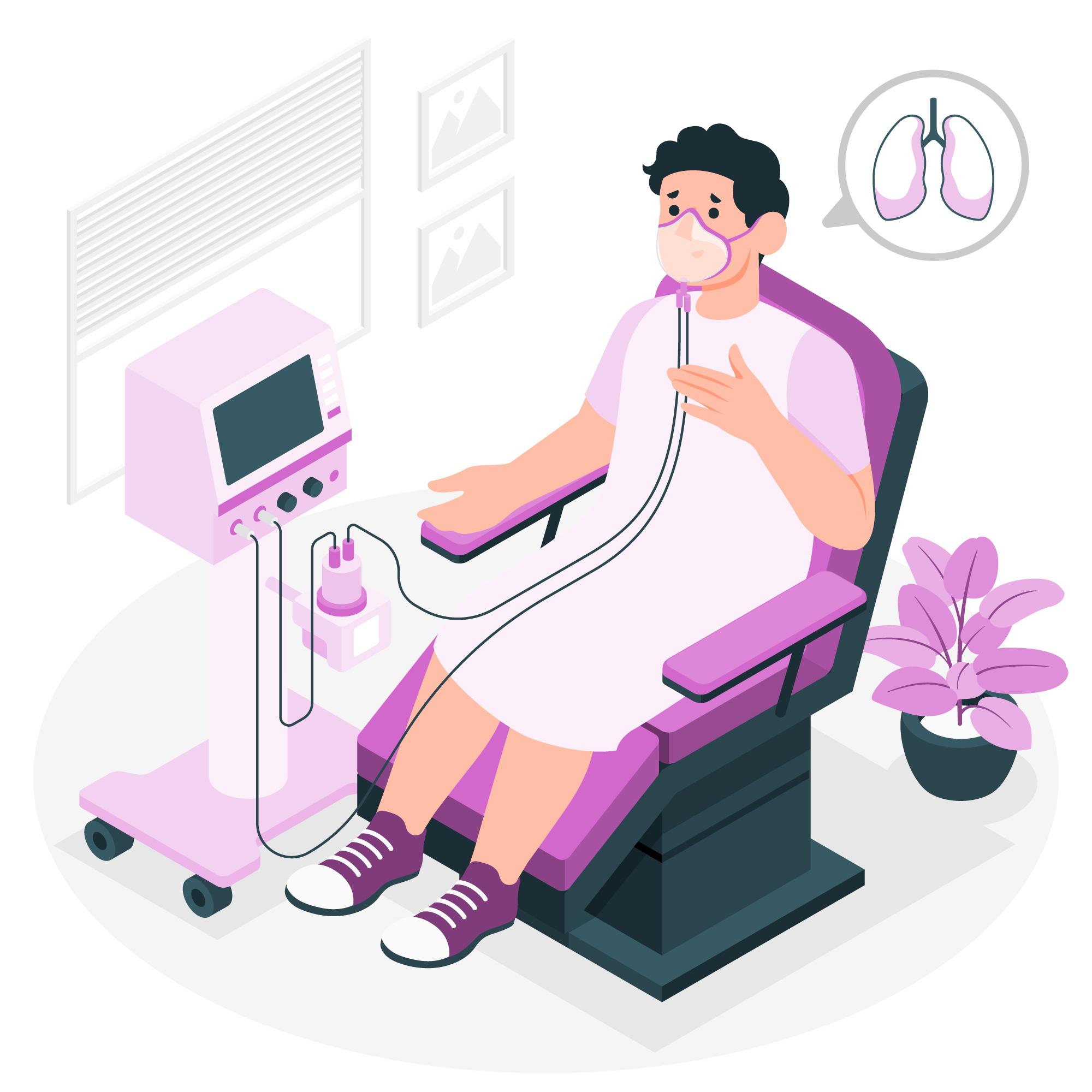
Despite the many medical advances in recent years, in the understanding of the pathophysiologic cascade that results in ARDS, including key inflammatory mediators and disruption of the normal alveolar-capillary endothelial barrier, mortality from ARDS remains high and there is no pharmacological treatment for ARDS that reduces mortality in the long or short term.
- Bos LD et al. ARDS: challenges in patient care and frontiers in research. European Respiratory Review 2018 27: 170107; DOI: 10.1183/16000617.0107-2017.
- Battaglini D et al. J. Clin. Med. 2023, 12(4), 1381;
URL: https://doi.org/10.3390/jcm12041381. - McNicholas BA et al. Demographics, management and outcome of females and males with acute respiratory distress syndrome in the LUNG SAFE prospective cohort study. European Respiratory Journal 2019 54: 1900609; DOI: 10.1183/13993003.00609-2019.
- Ruhl AP et al. Healthcare utilization and costs in ARDS survivors: a 1-year longitudinal national US multicenter study. Intensive Care Medicine; 43: 980–991.
- Mart MF et al. The long-lasting effects of the acute respiratory distress syndrome. Expert Rev Respir Med. 2020; 14(6):577-586.
- Herridge MS et al. Functional Disability 5 Years after Acute Respiratory Distress Syndrome. N Engl J Med 2011; 364:1293-1304.
- Mallory P et al. A comprehensive review of the use and understanding of airway pressure release ventilation. Expert Review of Respiratory Medicine. 2020; 14(3):
URL: https://doi.org/10.1080/17476348.2020.1708719. - Giraud R et al. The use of extracorporeal CO2 removal in acute respiratory failure. Ann Intensive Care. 2021; 11(1):43.
- Adverse effects of extracorporeal carbon dioxide removal (ECCO2R) for acute respiratory failure: a systematic review protocol. Syst Rev. 2016 Jun 7; 5:98.
- Titus A et al. Extracorporeal Carbon Dioxide Removal. [Updated 2022 Nov 7]. In: StatPearls [Internet]. Treasure Island (FL): StatPearls Publishing; 2023 Jan-. Available from:
URL: https://www.ncbi.nlm.nih.gov/books/NBK556004/. - Meyers M et al. High-frequency oscillatory ventilation: A narrative review. Can J Respir Ther. 2019; 55:40-46.
- Abdelbaki AM et al. The Impact of High-Flow Nasal Cannula Therapy on Acute Respiratory Distress . Syndrome Patients: A Systematic Review. Cureus. 2023; 15(6): e41219. doi:10.7759/cureus.41219.